12.00
Normal
0
false
false
false
EN-US
X-NONE
X-NONE
MicrosoftInternetExplorer4
/* Style Definitions */
table.MsoNormalTable
{mso-style-name:"Table Normal";
mso-tstyle-rowband-size:0;
mso-tstyle-colband-size:0;
mso-style-noshow:yes;
mso-style-priority:99;
mso-style-qformat:yes;
mso-style-parent:"";
mso-padding-alt:0in 5.4pt 0in 5.4pt;
mso-para-margin:0in;
mso-para-margin-bottom:.0001pt;
mso-pagination:widow-orphan;
font-size:11.0pt;
font-family:"Calibri","sans-serif";
mso-ascii-font-family:Calibri;
mso-ascii-theme-font:minor-latin;
mso-fareast-font-family:"Times New Roman";
mso-fareast-theme-font:minor-fareast;
mso-hansi-font-family:Calibri;
mso-hansi-theme-font:minor-latin;
mso-bidi-font-family:"Times New Roman";
mso-bidi-theme-font:minor-bidi;}
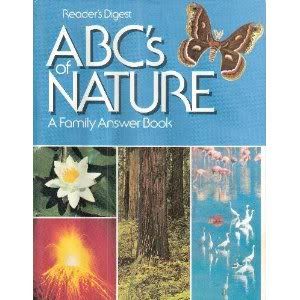
This is our first post for the Autumn Challenge hosted by the Outdoor Hour at the Handbook of Nature blog. We don’t have the Handbook of Nature book since we had to downgrade back to dialup until Toodles gets another job; we are using some great resource books we bought at our library book sale. The ABC’s of Nature and North American Wildlife, both by Readers Digest. All information in these posts comes from one or both of these books unless otherwise stated.
12.00
Normal
0
false
false
false
EN-US
X-NONE
X-NONE
MicrosoftInternetExplorer4
st1\:*{behavior:url(#ieooui) }
/* Style Definitions */
table.MsoNormalTable
{mso-style-name:"Table Normal";
mso-tstyle-rowband-size:0;
mso-tstyle-colband-size:0;
mso-style-noshow:yes;
mso-style-priority:99;
mso-style-qformat:yes;
mso-style-parent:"";
mso-padding-alt:0in 5.4pt 0in 5.4pt;
mso-para-margin:0in;
mso-para-margin-bottom:.0001pt;
mso-pagination:widow-orphan;
font-size:11.0pt;
font-family:"Calibri","sans-serif";
mso-ascii-font-family:Calibri;
mso-ascii-theme-font:minor-latin;
mso-fareast-font-family:"Times New Roman";
mso-fareast-theme-font:minor-fareast;
mso-hansi-font-family:Calibri;
mso-hansi-theme-font:minor-latin;
mso-bidi-font-family:"Times New Roman";
mso-bidi-theme-font:minor-bidi;}
Oaks And Acorns
Oaks are the most wide spread broadleaf tree in North America. They also have the largest number of species; 58 trees and 10 shrubs; and occupy the greatest variety of habitats. The leaves on a single oak tree can come in many shapes. Oak trees can also hybridize making identification more complex.
There are two groups of oaks; red and white. Red oaks have tiny bristles on the tips of the leaves and/or lobes. Red oak trees have bitter acorns that take two years to mature and do not fall off the tree during winter. The acorn caps are lined with woolly hairs. White oak trees have rounded lobes without bristles. White oak tree acorns are sweet and mature in six months. The acorns fall off the tree in winter.
Individual species of oak trees can identified by leaf shape and sometimes leaf color. Many birds and mammals eat the acorns of oak trees. These include squirrels, raccoons, deer, bear, turkey, woodpeckers, jays and many more. These animals help spread the oak by storing the acorns and not reclaiming them. Sprouting acorns will grow full sized leaves and unusually long roots.
We have a red oak tree in our yard. We identified it by the leaf shape and the bristles on the end of the lobes.

There are also many other types of oaks in our area. We have identified and English oak leaf but have yet to identify the other oak leaves in this picture.

We have seen some that come close but we hesitate to say they are “that” type of oak. Do any of you in blogland care to see if you can ID them? Blessings! ~ Nikki

 Click to buy at Amazon
 [/caption]
 [/caption]
 [/caption]
 [/caption]
 [/caption]
 [/caption]
 [/caption]